Exporting activated carbon successfully requires precise classification, export packing, and accurate documentation. Use correct HS codes, include COA and Certificate of Origin, and ensure export packaging prevents moisture ingress. Polywoven sacks with inner liners, palletization, and sealed containers are common to protect carbon during maritime transit and avoid quality degradation.
Destination-specific regulations may require MSDS, phytosanitary documents, or chemical safety documentation depending on the carbon grade and end-use. Laxmi International handles export documentation, labelling requirements, and works with freight forwarders experienced with bulk chemical shipments to reduce customs delays and ensure timely delivery to ports such as JNPT and Mundra.
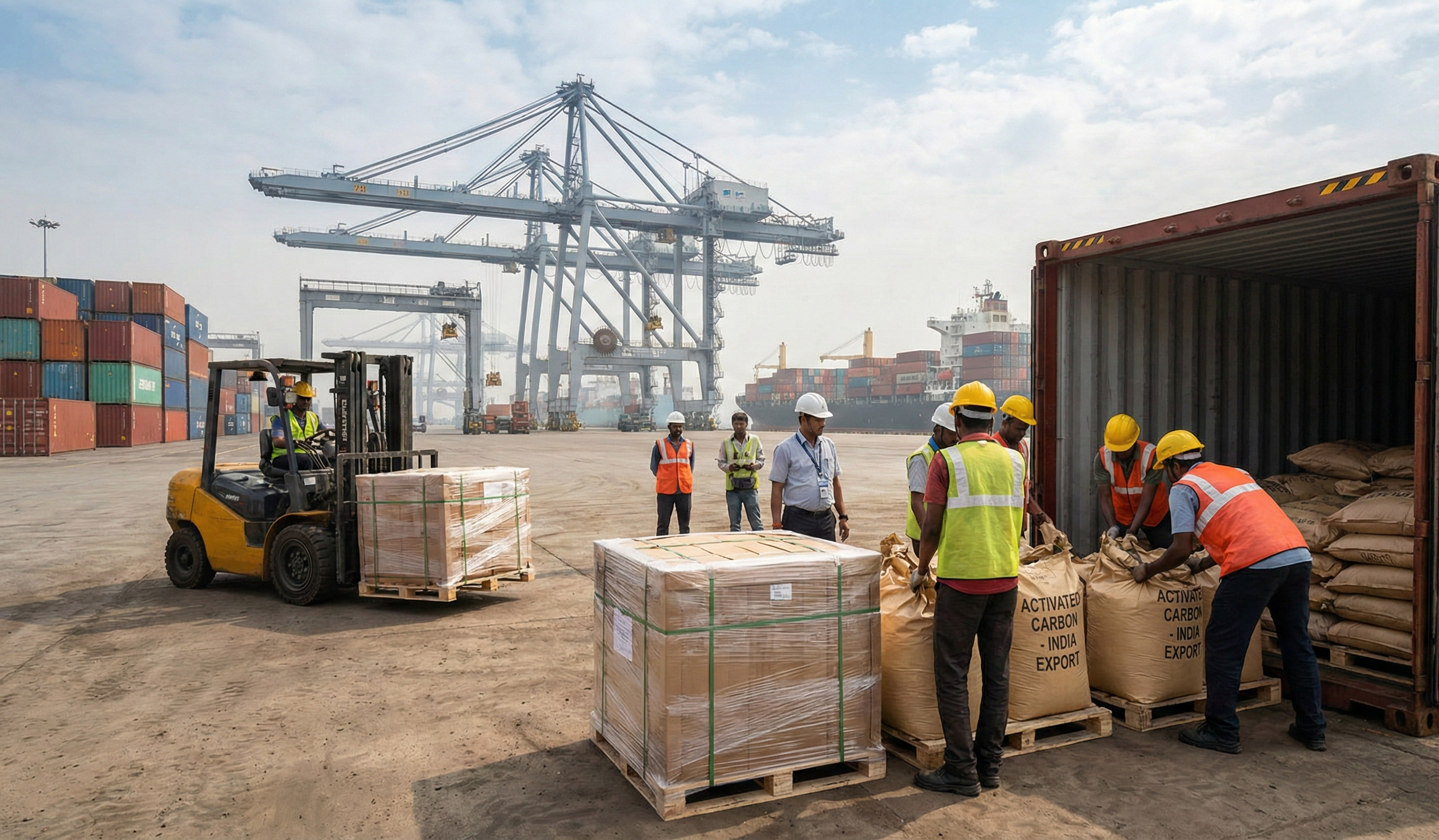
Buyers should also consider insurance, transit humidity control and contingency plans for customs hold-ups. For small buyers, consolidated LCL shipments are possible; for larger clients, full container loads (FCL) are most cost-effective. Laxmi International provides tailored logistics solutions and trade terms (FOB/CIF) to suit buyer preference and budget.
Contact our export desk for HS code guidance, packaging specification sheets, and sample shipment arrangements to validate product quality prior to bulk purchase.